
The History of the Trust & Harry Guntrip
Minister, Psychoanalyst, and “Healer of Lost Souls”
The Minister and the Analyst
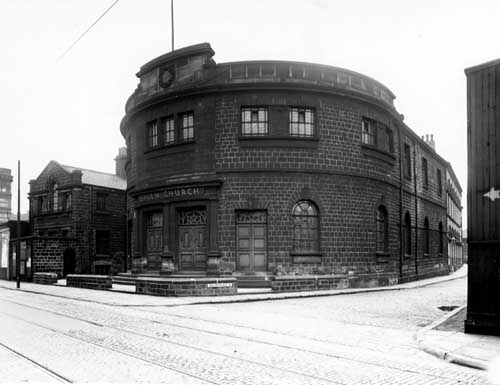
Harry Guntrip was a unique figure in the history of psychoanalysis. Originally the Reverend of the prestigious Salem Church in Leeds , he found himself caught between his spiritual duties and a deepening need to understand the “broken personalities” he encountered in his pastoral work.
Described in a recent reappraisal as an “Analytic Heretic and Minister to Lost Souls”. His work was driven by a belief in agape (selfless love) as a therapeutic force, famously stating that “to care for people is more important than to care for ideas”.
Theoretical Contributions
Guntrip’s personal analysis with Donald Fairbairn in Edinburgh and later D.W. Winnicott in London deeply informed his work. He is best known for his concept of the “Regressed Ego”—the idea that a traumatised part of the self can withdraw deep inside to a “safe place” to survive, often feeling cut off from the world.
This understanding of the “schizoid” experience—of feeling empty or disconnected rather than just conflicted—remains a vital tool for psychotherapists today. His ability to blend clinical rigour with profound humanism laid the groundwork for much of the relational psychotherapy we see in Yorkshire today.
The Roots of Psychotherapy Training in Yorkshire
Guntrip provided much of the early psychotherapy training for mental health professionals in Leeds and Bradford, working alongside Dr Ronald Markillie and Alan Dabbs.
This lineage continued through Brian Lake, a consultant psychotherapist in Leeds and an analysand of Guntrip’s. The result of these connections was a strong history of object relations theory in Yorkshire, culminating in the Postgraduate Diploma in Psychotherapy. This course became the foundation for many psychoanalysts and psychotherapists practising in the region.
Founding the Trust (1986–Present)
In 1986, Marta Smith (Consultant Child Psychotherapist) and Dr Celly Rowe (Consultant Psychiatrist) began working to raise funds to provide a network of local training events.
Their first fundraising concerts were held in colleagues’ homes—including those of Barbara Mindham, Caroline Owens, and Susie Godsil. The initiative was so popular that they approached Voluntary Action Leeds to formalise the group.
The Harry Guntrip Trust Yorkshire was granted charitable status in March 1995 (Reg: 1045528). From its inaugural concert at the Clothworkers Hall to partnerships with Opera North, the Trust has grown to offer reliable bursaries to trainees in need of support.
Recent Reappraisal
The relevance of Harry Guntrip’s work is still being explored today. A 2024 paper by Michael Brog, published on the 50th anniversary of Guntrip’s death, highlights his enduring importance as a clinician who understood the deepest fears of the human condition
Reference: Brog, M. (2024). Analytic Heretic And Minister to Lost Souls: Harry Guntrip Reappraised at the 50th Anniversary of His Death. American Imago.